
Access to the sea in Pollara is via a staircase of about 150 steps leading down to the Balate, a tiny fishermen’s village carved into the rock. This is where the film Il Postino starring Massimo Troisi was shot. From here you can admire Punta del Perciato, a majestic lava stone arch sculpted by the power of the sea and an undisputed symbol of the island.
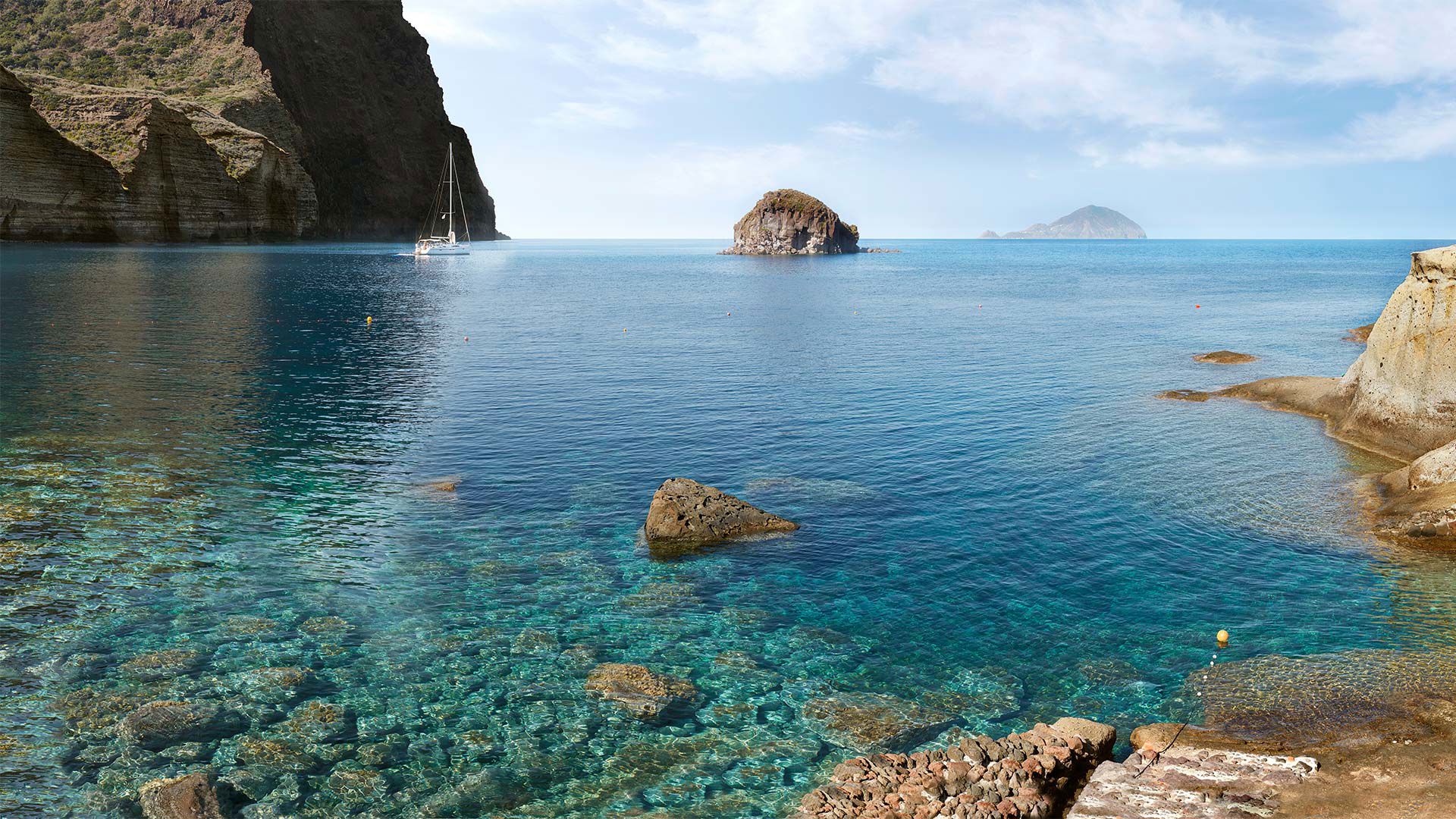
In the bay of Pollara you can also see the Faraglione, the only remaining visible fragment of the ancient crater that once enclosed the village. Observing Pollara from the sea is the best way to understand the volcanic origins of this land. The pale cliff supporting the village bears clear traces of past eruptions, and from the water the crater embracing Pollara reveals its full grandeur.
The sea around Salina displays ever-changing colors, from the green hues near the coast to the deep cobalt blue of the depths, blending into the sky—making it a true paradise for snorkeling and diving. The rugged coastline frames an extraordinary succession of small coves, sheer cliffs, lava caves, intimate pebble beaches, and stretches of black sand, all praised in Legambiente’s prestigious Blue Guide for their landscape value.
In the bay of Pollara, the seabed is constantly changing and fascinating. On the rocky wall opposite the Balate lies an area of underwater fumaroles, where millions of tiny volcanic bubbles rise toward the surface, creating a magical effect and a natural hydromassage.
Beyond Pollara—where you can experience the unique sensation of swimming in a submerged prehistoric crater—the island’s main seaside access points include the ancient Scario Beach, with its large weather-smoothed pebbles; the evocative black sand beach of Rinella; and the beaches of Santa Marina and Lingua, perfect for enjoying the sea of the Aeolian Islands.